

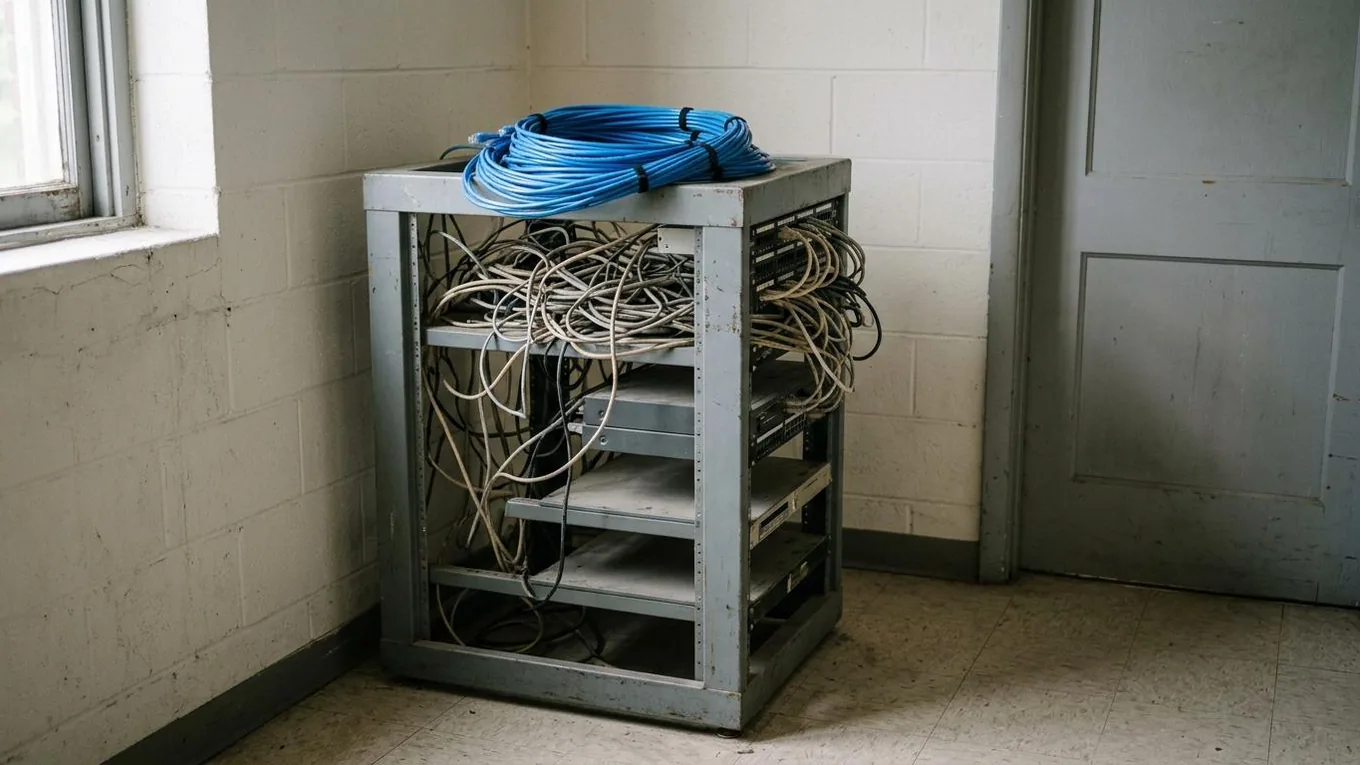
On Friday, November 13, 2026, the FAA halted departures across the United States for more than four hours. By evening, federal officials had described what went wrong. According to Transportation Secretary Sean Duffy, routers carrying air traffic control data were overloaded and started returning inconsistent information. Homeland Security Secretary Markwayne Mullin said new equipment and patches were being added to the existing framework and the older system could not keep up. Officials said they have seen no evidence of a cyberattack, and the investigation is still open.
You do not run an air traffic control network. But if you own a law firm, a medical practice, a med spa or a home improvement company, you probably run a smaller version of the same setup: new tools sitting on top of old ones. That is where leads get lost.
What changed
Nothing changed in marketing on Friday. What changed is that a very public failure showed a pattern most business owners recognize. The new technology was not the problem by itself. The old system was not the problem by itself. The trouble came where the two met.
What it means for a local service business
Over the past two years, many practices and contractors have added an AI chat widget, an AI answering service, online booking, a new CRM or automated text follow-up. Most of them added it without touching what was already there: the phone system from years ago, the website form that emails one inbox, the call tracking numbers nobody has audited, the spreadsheet the front desk still trusts.
Each tool works in its own demo. Together they fail quietly:
- The AI assistant books a consultation, but the booking never reaches the calendar the office uses.
- A web form creates a contact in the CRM, and the same person calls an hour later and becomes a second, separate record. Nobody follows up on either.
- After-hours calls forward to a new service, but the old voicemail still picks up first on some lines.
- Call tracking swaps the number on the website, and the new chat widget shows the old one.
- Two systems both send a "thanks for reaching out" text, and neither tells a person to call back.
The FAA noticed its failure right away because planes stopped. A business usually does not notice, because a lead that never arrives does not complain. It hires someone else.
What to do this week
- Draw the path of one lead. Write down every step from "someone calls or fills out a form" to "they are on the schedule." Note which system holds the lead at each step and who is responsible for it.
- Test it yourself, four ways. Call during business hours. Call after hours. Submit the website form. Use the chat. Use a real phone and a real email address, then see where each one lands and how long a reply takes.
- Find the handoffs. Every point where one tool passes a lead to another is a place it can drop. For each handoff, ask what happens if the second tool is down or full.
- Pick one system of record. Leads should end up in one place that a person checks every day. Everything else should feed it.
- Add one tool at a time. Before the next AI tool goes live, run the four tests again. Keep the old path working until the new one has passed.
Common questions
Did AI cause the FAA ground stop?
That has not been confirmed. Officials pointed to overloaded routers and to new technology being added to an aging system, and said the investigation is ongoing. This post is about the pattern they described, not about AI being at fault.
Should we stop adding AI tools to our front desk?
No. An AI front desk can answer after hours and capture leads a voicemail would lose. The point is to connect it properly and test the whole path, not just the new piece.
How often should we test our lead path?
Any time something changes: a new tool, a new phone number, a website update, a staffing change at the front desk. Otherwise once a month is a reasonable habit.
Next step
If you are not sure where your leads go after the first call or form, that is the place to start. Minding Your Media sets up and connects lead handling for service businesses, including after-hours coverage and CRM and automation setup.